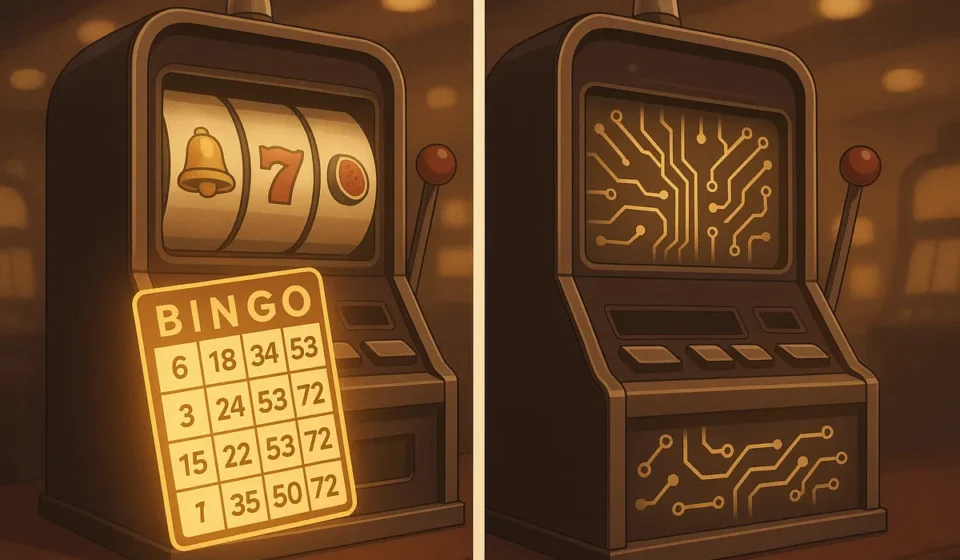

Picture a player in a tribal casino in Alabama. The cabinet looks like a slot machine, sounds like a slot machine, and pays like a slot machine. But in the top corner of the screen there’s a small bingo card, and every few seconds a number gets daubed. The reels spinning in the middle aren’t deciding anything. They’re a costume. The bingo card is the game.
That gap between what a game looks like and what actually determines the outcome is the whole story of Class II gaming, and it’s why a recent supplier deal is worth a closer look.
What the Amelco-Boing Gaming deal reveals about tribal casino classifications
In late September 2026, the platform supplier Amelco and games studio Boing Gaming announced they would supply Class II mobile games to tribal operators in the United States. On the surface it reads like routine B2B news: one company brings the platform and wallet layer, the other brings the game content, tribes get a mobile casino gaming product.
The interesting part is the word “Class II.” Suppliers don’t usually advertise a legal classification in a headline unless that classification is the point. A deal built specifically around Class II content exists because a large number of tribal operators cannot legally offer Class III games, or can only offer them under conditions they’d rather not accept. The classification isn’t a technical footnote. It decides what games a casino can put in front of you and who signs off on them.
One quick clarification for readers in India, since the naming causes genuine confusion: “Indian gaming” in this context means Native American tribal gaming in the US. The law involved is the Indian Gaming Regulatory Act. It has nothing to do with Indian gambling law. What travels across borders is the mechanics, and understanding a bingo-based machine versus an RNG-based one is useful wherever you play.
What is Class II gaming?
Class II gaming is bingo, including electronic versions of bingo, plus games like pull-tabs, punch boards and tip jars when played in connection with bingo, and certain non-banked card games where state law already permits them. A Class II electronic machine may look like a slot, but underneath it is running a bingo game between real players.
The legal framework under IGRA
The Indian Gaming Regulatory Act of 1988 sorted tribal gaming into three buckets:
- Class I — traditional and social games tied to tribal ceremonies. Regulated by the tribe alone.
- Class II — bingo and bingo-like games, pull-tabs, and non-banked card games. Regulated by the tribe with oversight from the National Indian Gaming Commission (NIGC).
- Class III — everything else. Slot machines, roulette, blackjack, baccarat, banked card games, and other house-banked wagering.
The practical difference sits in one requirement: Class III gaming needs a compact negotiated between the tribe and the state, while Class II does not. If a tribe’s state permits bingo in some form, the tribe can offer Class II gaming under its own regulation and federal oversight, without a state at the table.
That’s why Class II exists as a commercial category at all. Compact negotiations can stall for years, carry heavy revenue-sharing terms, or simply fail. Where that happens, tribes keep operating on the Class II side. Facilities in Texas and Alabama have run bingo-based floors for exactly this reason. It’s tribal sovereignty working within the limits Congress drew in 1988.
How Class II games actually work
A Class II machine is legally an “electronic aid” to bingo, not a gambling device in its own right. The sequence looks like this:
- You buy in and request a card. The machine links you to a central bingo server.
- The server needs other players in the same game, so it waits until enough participants are connected. On a busy floor that takes a fraction of a second.
- Numbers are drawn from a single pool for everyone in that game.
- Your card is daubed automatically, and the prize you win depends on which pattern you complete and how your card compares to the others in the game.
- The reels then spin and land on a symbol combination that pays out the amount the bingo draw already determined.
Read that last step again, because it’s the part players miss. On a Class II machine, the reel animation is a presentation layer. The result was settled before the reels moved.
Class II vs Class III gaming: the key differences
Here’s the comparison in one view.
| Feature | Class II | Class III |
|---|---|---|
| Legal basis | Bingo and bingo-like games under IGRA | All other casino-style wagering under IGRA |
| State compact needed | No | Yes |
| Primary regulator | Tribal gaming commission with NIGC oversight | Tribal commission plus terms set in the state compact |
| Outcome engine | Central bingo draw shared by multiple players | RNG on each individual machine or game server |
| Who you compete against | Other players in the same bingo game | The house |
| Typical games | Electronic bingo, pull-tabs, slot-style bingo cabinets | Slots, roulette, blackjack, baccarat, video poker |
Regulatory differences
Class II runs on federal minimum internal control standards and technical standards published by the NIGC, enforced day to day by the tribe’s own gaming commission. Class III adds a state layer: the compact can dictate machine counts, permitted game types, minimum payback percentages, audit rights and revenue sharing. Two casinos a few hundred kilometres apart can therefore offer noticeably different floors purely because of what their respective states agreed to.
Game mechanics and RNG
A Class III slot uses a random number generator to produce an independent outcome for your spin. Nobody else’s play affects it. A Class II cabinet also uses randomisation, but at the bingo draw, and that draw is shared. You’re being dealt a position in a communal game rather than an isolated spin.
This matters for a specific reason: in a Class II game, the prize structure is finite for that draw. Someone completes the top pattern; the rest place below them. In a Class III slot, every player could theoretically hit the same top combination on the same spin, because each RNG call is independent.
Player experience
Honestly? Most people can’t tell. The cabinets are built by the same kind of studios, use the same art, the same free spin features, the same volatility profiles. The tells are small: a bingo card or ball display somewhere on the screen, a “daub” button, a very brief pause before the reels move while the server assembles the game, and terms and conditions that mention bingo. Some machines require one touch to daub the card, which is why you’ll see a button doing a job that looks decorative.
Common Class II games in tribal casinos
- Slot-style bingo cabinets. The bulk of a Class II floor. Reels on the outside, bingo underneath.
- Traditional electronic bingo. Multi-card play on a tablet or terminal, often in a dedicated bingo hall with scheduled sessions.
- Electronic pull-tabs. The digital version of the paper tab: a finite pool of pre-determined tickets, some of which are winners. When the pool is exhausted, the deal is over.
- Non-banked card games. Poker variants and similar games where players wager against each other and the operator takes a rake instead of banking the action.
Progressive prizes exist on Class II floors too, funded across linked machines in the same way you’d expect.
Are Class II games fair? Understanding the odds
Class II games are tested and certified like any other regulated casino game. Independent labs audit the software against NIGC technical standards, and tribal gaming commissions enforce them. Fair, in the regulatory sense, means the outcome is genuinely random, the paytable matches what the game claims, and the results can be audited. Class II clears that bar.
What Class II does not do is remove the house edge. Every commercial gambling product keeps a slice, whether the engine is a bingo draw, a pull-tab pool or an RNG. On a bingo-based machine the operator’s take comes out of the prize pool before it’s distributed; on a Class III slot it’s built into the paytable. Same outcome for your bankroll over time: the longer you play, the closer your results drift toward a negative expected value.
Two points worth keeping straight:
- Return figures aren’t automatically comparable. Some state compacts set minimum payback percentages for Class III machines. Class II payout structures are governed differently and vary by operator and game. If a specific RTP matters to you, check that game’s published information rather than assuming a class-wide number.
- Pre-determined does not mean rigged. An electronic pull-tab draws from a finite pool decided in advance, and that’s disclosed in the game rules. It’s a different model to a fresh RNG call per spin, not a dishonest one. Both are auditable; neither is beatable through timing, patterns or “hot” machines.
If you want the deeper mechanics of how randomness is generated and certified, our explainer on RNG and game fairness covers the testing process in more detail.
Mobile Class II gaming: what players should know
Moving Class II to a phone changes the wrapper, not the engine. The bingo server still runs the draw, still needs multiple participants, still settles the result before any animation plays. What mobile adds is a platform layer: account management, wallet, geolocation and the tribe’s own regulatory reporting. That’s the part a supplier like Amelco brings, with Boing Gaming supplying the certified Class II content that sits on top.
The practical constraint is geography. Tribal mobile gaming is generally offered inside the tribe’s jurisdiction, with geofencing keeping play within permitted boundaries. It’s a way for a tribe to extend its floor across its own land rather than a route to nationwide online casino play, and it doesn’t depend on a state compact the way a Class III online product would. For operators sitting outside a compact, a certified Class II mobile catalogue is one of the few routes to a digital product at all.
For a player, the takeaway is simple enough: read the game info panel. If it mentions bingo, patterns or daubing, you’re in a Class II game, and the reels are telling you a story that’s already finished. If you’re weighing mobile options more broadly, our guide to mobile casino gaming covers what to check before you deposit anywhere.
Common questions
What is Class II gaming in one sentence?
Bingo and bingo-derived games, including electronic machines that look like slots but resolve outcomes through a shared bingo draw, regulated by tribes under federal oversight without a state compact.
How does Class II differ from Class III?
Class III covers house-banked casino games driven by an RNG and requires a tribal-state compact. Class II is bingo-based, players compete against each other, and no compact is needed.
What games are Class II?
Electronic and traditional bingo, electronic pull-tabs, punch boards, tip jars, and non-banked card games where state law allows them.
Are Class II games fair compared to Class III?
Both are independently tested and regulated, and both carry a house edge. The difference is how the result is produced, not whether the result is honest.
One last thing, and it applies to every class of game on this page: these products are entertainment with a built-in mathematical cost. Set a deposit or loss limit before you start, treat losses as the price of playing rather than something to chase, and use the self-exclusion and cool-off tools any regulated operator has to offer. The classification on the cabinet changes the paperwork behind it. It doesn’t change the maths.
Regulatory detail on IGRA classifications and technical standards is published by the National Indian Gaming Commission.